

You finished your last session 20 minutes ago, and you're staring at a blank note template. Again. If you're hunting for a HIPAA compliant dictation app that actually fits clinical work, you already know that generic voice to text tools don't cut it for therapy documentation.
This list is for therapists and healthcare professionals who need fast, reliable documentation without risking PHI. You won't find vague product descriptions here. Instead, you'll get a consistent breakdown of each option: what it does well, what to watch for, who it's best for, and what pricing questions to ask before you commit.
I evaluated these dictation tools using two lenses. First, does the medical dictation app meet real HIPAA compliance requirements (not just homepage claims)? Second, does it actually reduce your documentation time in a therapy workflow? Both matter. Let's start with what "HIPAA compliant" really means in practice.
How I'm Defining "HIPAA Compliant" for This List
The non-negotiables you need to verify yourself
Marketing language is not compliance. Before you enter a single client detail, confirm these items directly with the vendor:
- Business Associate Agreement (BAA): Available, easy to sign, and clearly scoped
- Encryption: Patient data encrypted both in transit and at rest with secure data transmission protocols
- Access controls: Role-based permissions and strong authentication ensuring only authorized users access patient information
- Audit logs: Especially critical if you run a group practice
- Data retention and deletion: You control what stays and what gets removed
- Model training policies: The vendor should not train AI on your protected health information without explicit, documented opt-in
If a vendor hesitates on any of these, that's your answer.
The clinician workflow test: HIPAA compliance is required, but not sufficient
A HIPAA compliant dictation software that doesn't fit therapy documentation is just a secure inconvenience. Ask these questions:
- Can you go from session to insurance-ready note without copy-paste chaos?
- Does it handle SOAP notes, DAP, GIRP, narrative styles, and your preferred phrasing?
- Does it support telehealth audio, in-person recording, and post-session dictation?
- Can it handle multiple speakers for couples, family therapy, and group work?
- Does it clearly separate psychotherapy notes from progress notes when needed?
What to Look for in a HIPAA Compliant Dictation Tool
Accuracy and clinical usefulness
- Strong behavioral health vocabulary, not just medical terminology
- Low correction burden for diagnoses, interventions, and medication names
- Smart formatting into clinical sections, not just a wall of text
- Ability to learn your phrasing and preferred level of detail over time to create accurate documentation
Integration and portability
- Works where you chart: web, desktop, or mobile devices
- EHR integration options like extensions, copy buttons, or direct EHR systems connectivity
- Export options for supervision, audits, or documentation reviews
Risk reducers
- PHI or PII redaction options for transcribed notes
- Admin controls for group practices
- Responsive support during onboarding, especially if you're switching from typing notes manually
1. Supanote
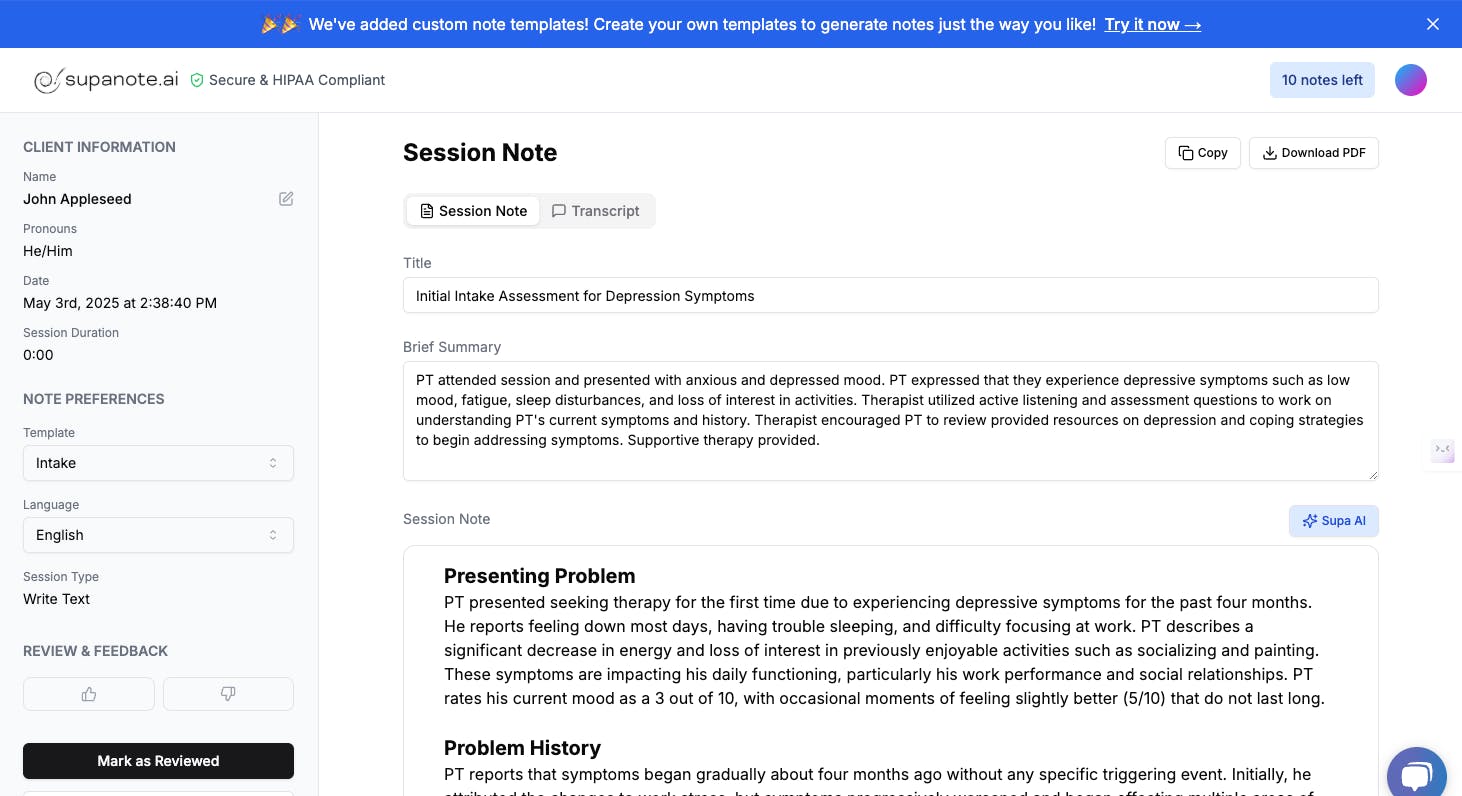
Supanote is an AI powered medical dictation tool built specifically for mental health therapists. It turns unstructured input into clean progress notes in your preferred format, eliminating the nightly backlog without pulling you out of session. This medical dictation software helps healthcare professionals document patient encounters efficiently.
Key features that matter in practice
- Flexible input: Record audio files, upload files, or dictate directly with unstructured text. Forgot to hit record? You can still get a note fast.
- Template-free operation: Works in SOAP notes, DAP, GIRP, and more without requiring setup
- AI learns your voice: Clinical notes sound like you wrote them, not a generic AI
- Group session support: Handles couples, family therapy, and group therapy with multiple speakers
- 100+ languages with automatic detection for bilingual therapy sessions
- PII scrubbing from transcripts to reduce unnecessary exposure of patient information
- SOC 2 Type 2 certified and fully HIPAA compliant with BAA for secure storage
Best for
- Private practice therapists who want faster documentation without rigid templates
- Group practice owners who need consistent documentation quality across clinicians
- Many clinicians who sometimes forget to record and still need a note fast
Pricing questions to ask
Free 14-day trial available. Paid plans start at $19.99/mo (billed annually) for 40 notes, scaling up to $69.99/mo for unlimited notes.
2. Mentalyc
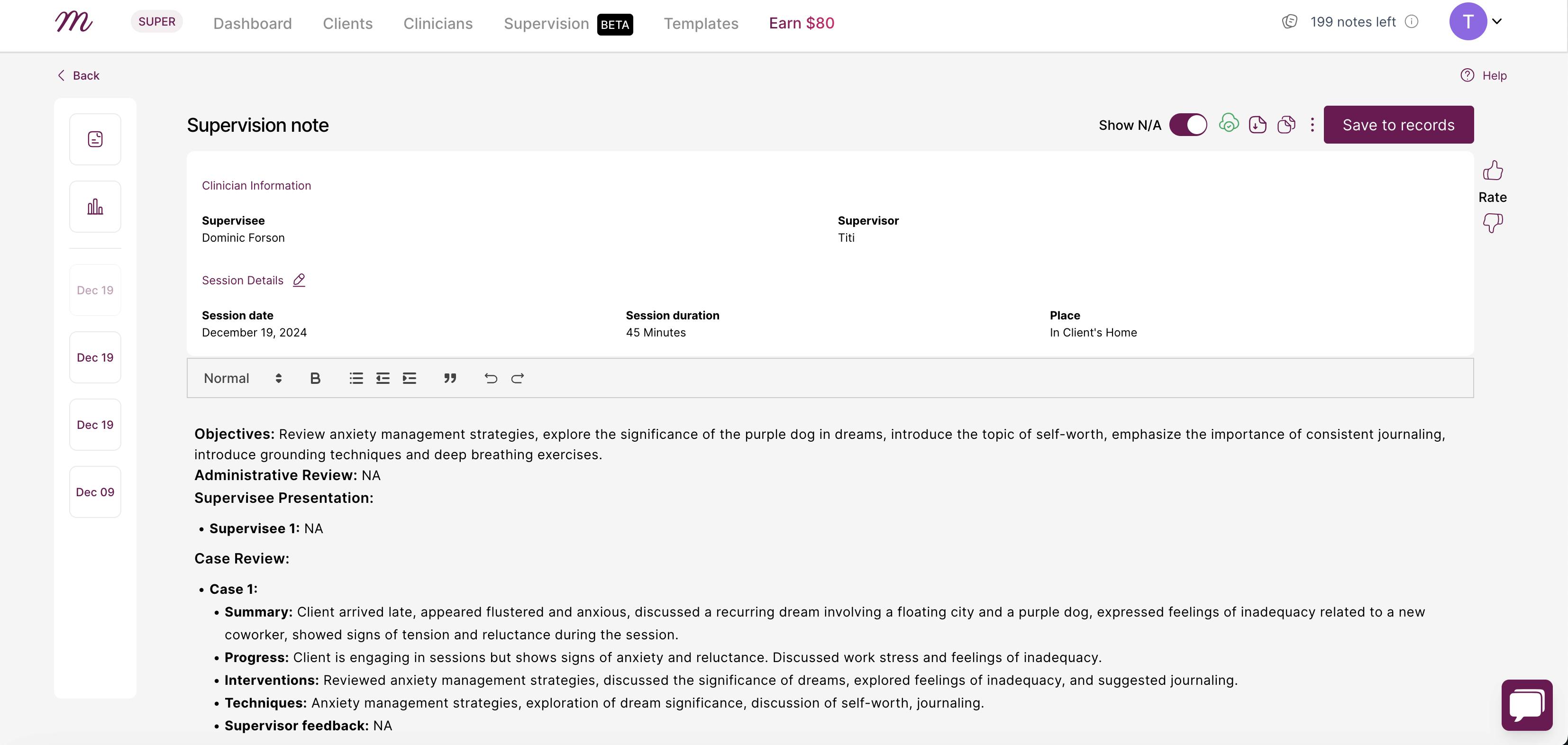
Mentalyc is a medical dictation app positioned specifically for therapists and mental health clinicians. It focuses on turning speech into structured notes while maintaining HIPAA safeguards, helping healthcare professionals save time on clinical documentation.
Key features to evaluate
- Speech recognition accuracy during or after therapy sessions
- Therapy note structures aligned with real payer expectations
- EHR integration workflow options and how much manual cleanup remains
- Access logs and team features for group practices to ensure only authorized users access client records
Best for
Therapists who want a therapy-specific product, not generic medical dictation software. Best if you prefer structured note output immediately after dictation.
Pricing notes
Free 14-day trial with 15 notes included. Paid plans range from $14.99/mo (Mini, 40 notes) to $99.99/mo (Super, 330 notes), billed annually.
3. Dragon Medical One
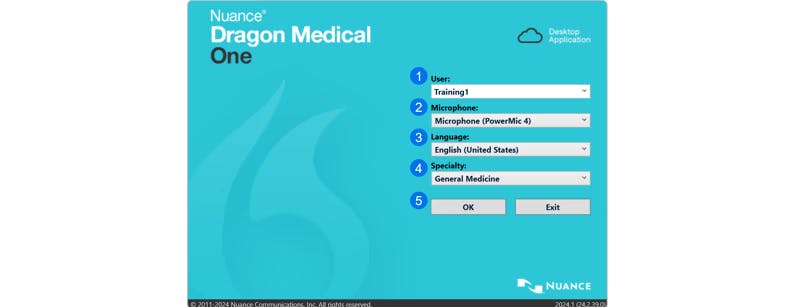
Dragon Medical One is a well-established medical dictation software known for speech recognition accuracy across health systems. It's often chosen when leadership wants a mature, standardized solution to document patient encounters efficiently.
Key features to evaluate
- Speech recognition accuracy and custom vocabulary support for complex medical terms
- Speed of correction and ability to create macros for repeated phrases
- How well it handles psychotherapy-specific language and narrative notes
- EHR systems compatibility in your specific environment
Best for
Clinics that prioritize pure dictation quality and established enterprise support. Ideal for medical professionals who want command-based dictation with shortcuts and need to speak naturally while creating patient notes.
Pricing notes
Subscription-based cloud pricing starting at $79/mo per user on a 3-year term, up to $99/mo on a 1-year term, with enterprise and volume discounts available.
4. Freed
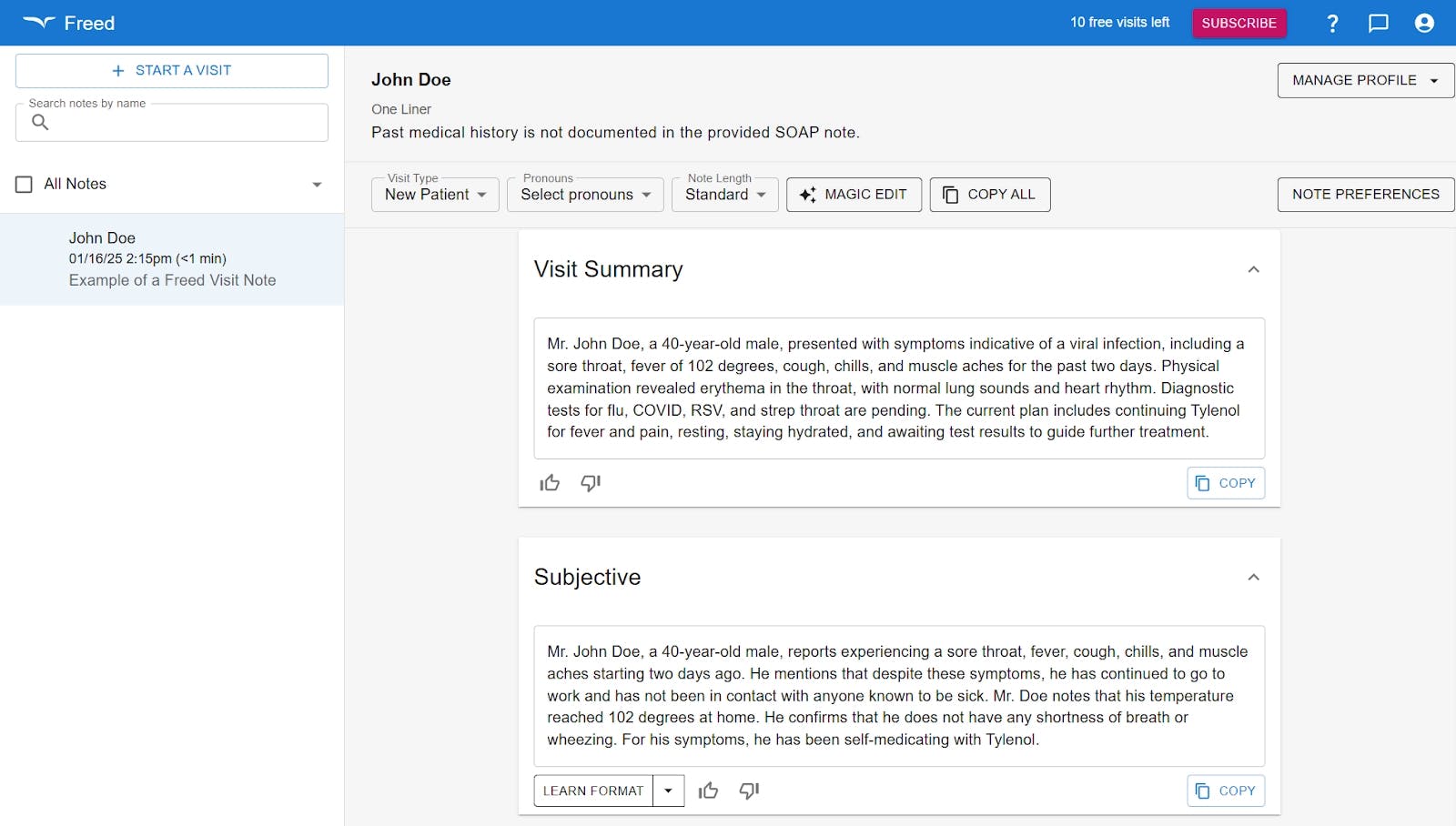
Freed is an AI medical dictation tool designed to convert clinical conversations into EHR-ready documentation quickly. This AI scribe solution helps healthcare providers create detailed notes from patient visits with minimal effort.
Key features to evaluate
- How it captures the visit: live listening versus post-visit dictation
- Quality of SOAP notes outputs and typical editing time
- EHR integration workflow support, including extensions and direct integration options
- Fit for therapy sessions, couples work, and behavioral health documentation
Best for
Medical or mixed settings that want SOAP notes quickly. Medical professionals who prefer an automated draft rather than just a transcript to save time on documentation.
Pricing notes
7-day free trial with unlimited visits. Paid plans start at $99/mo per clinician for unlimited notes, with a 50% discount for residents and trainees.
5. Suki
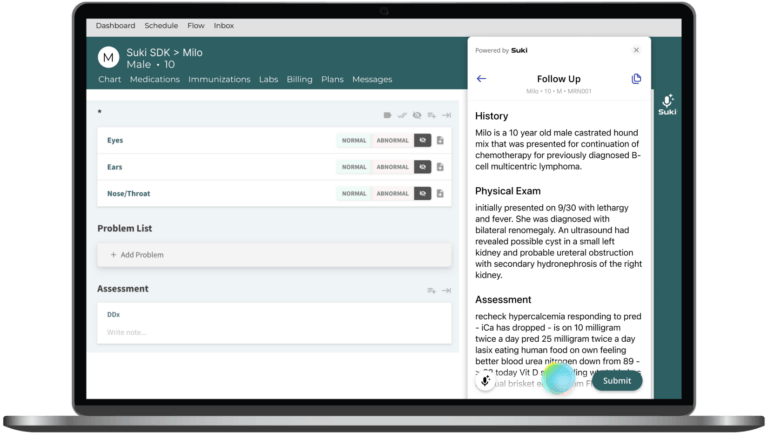
Suki is an AI dictation assistant and dictation software used across clinical specialties. It appeals to healthcare professionals who need speed and usability on the go through mobile dictation capabilities.
Key features to evaluate
- Mobile dictation reliability on mobile devices in real clinic conditions
- Behavioral health language support and therapy session nuance
- EHR systems workflows and actual setup time
- Content structuring for your documentation style to create accurate documentation
Best for
Healthcare professionals who dictate between patient visits, in hallways, or at home. Teams wanting a mainstream option with broad support for voice to text functionality.
Pricing notes
Plans start at $299/mo (Suki Compose for dictation and notes) and $399/mo (Suki Assistant with full EHR voice commands), with custom enterprise pricing and multi-year discounts available.
6. DeepScribe
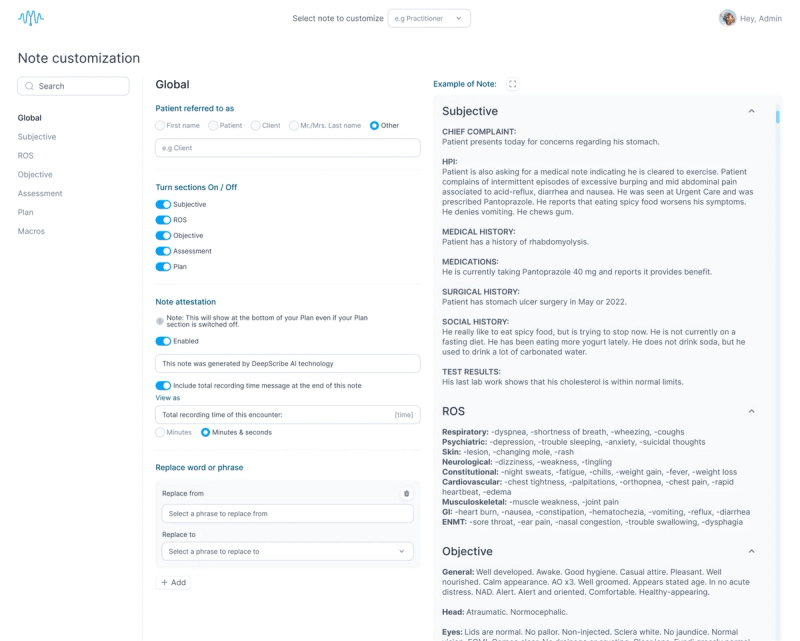
DeepScribe takes an AI scribe approach, automating visit documentation by listening during the encounter. This medical dictation software provides faster documentation for patient care.
Key features to evaluate
- Whether the workflow fits therapy sessions or feels too medical-visit oriented
- Speaker handling with emotional, fast-paced, or overlapping dialogue
- Editing interface and time to finalize clinical notes
- Controls to avoid capturing irrelevant personal details and keep patient information fully protected
Best for
Medical practices that want hands-off documentation capture with consistent visit structures to document patient encounters efficiently.
Pricing notes
Ask whether fees are per provider, per patient visit, or per minute recorded.
7. DeepCura
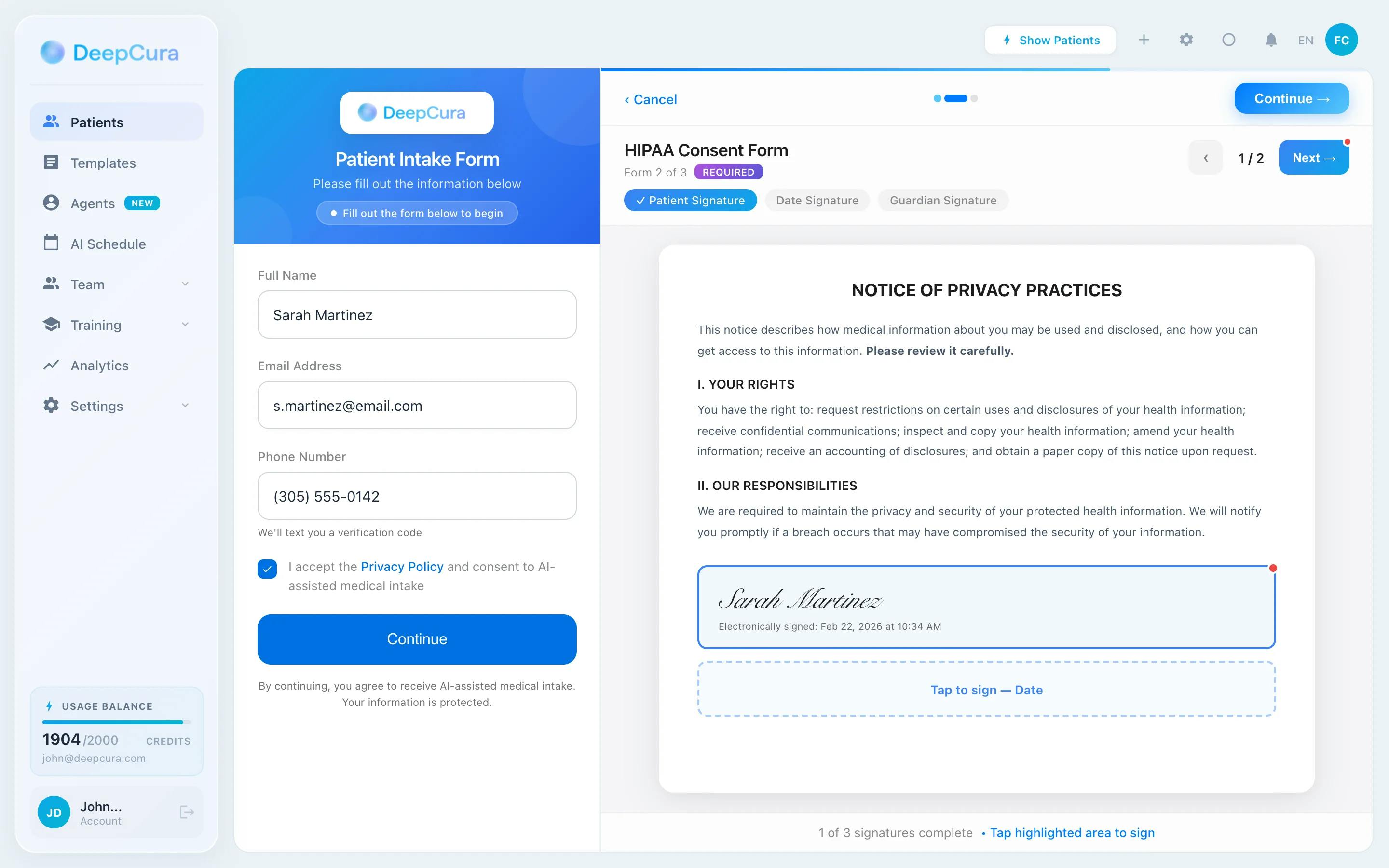
DeepCura is an AI medical dictation tool in the medical transcription and AI scribe category, often evaluated alongside other automated options.
Key features to evaluate
- Note quality and consistency across different session types
- Customization for your preferred documentation style
- HIPAA compliance safeguards, BAA availability, and data handling transparency
- Multi-speaker performance across therapy modalities and family therapy settings
Best for
Clinics comparing multiple AI scribe options and prioritizing automation for their documentation process.
Pricing notes
All-in-one platform at $129/mo per provider with a free trial available.
8. VoiceboxMD
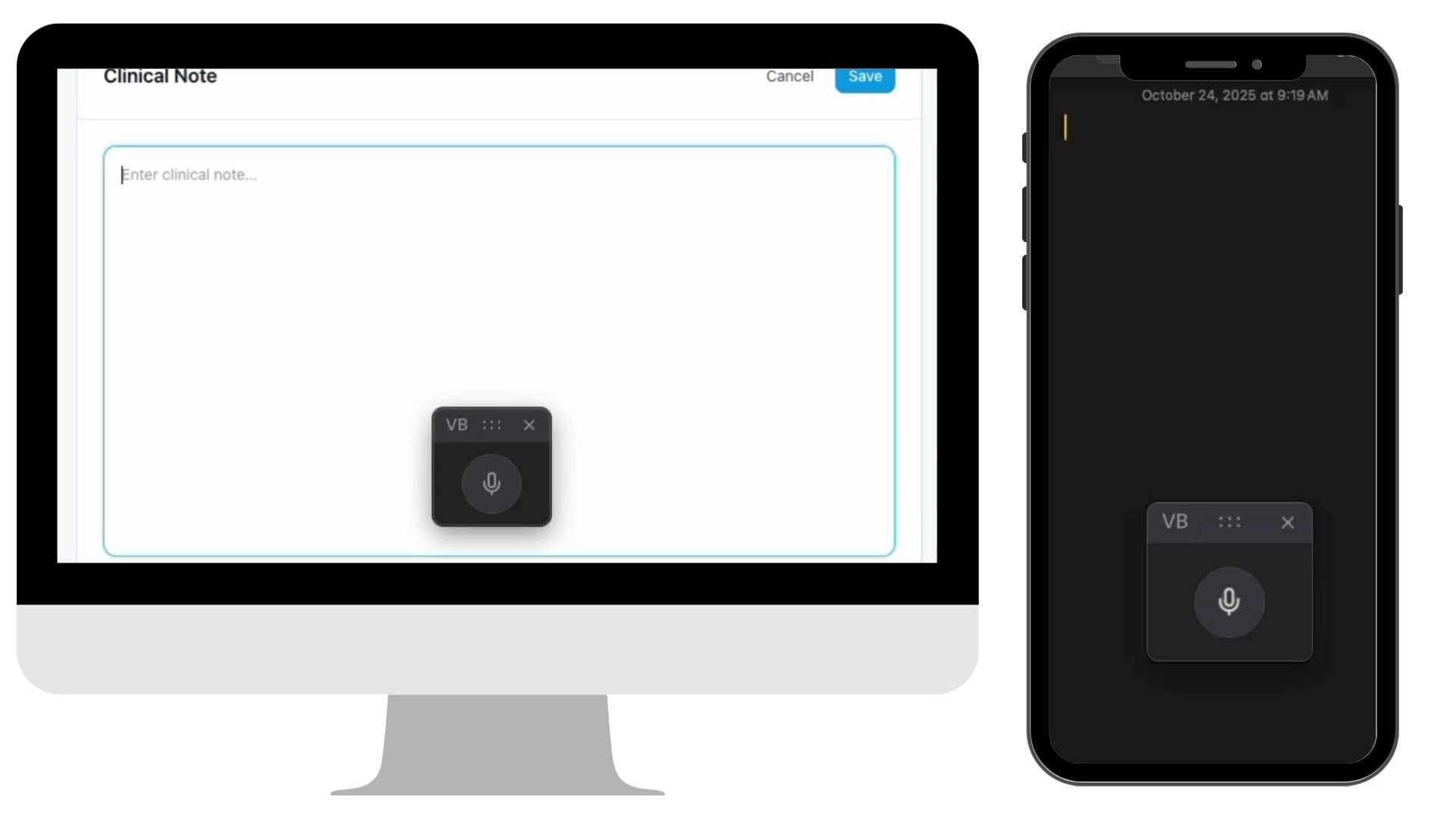
VoiceboxMD is an AI dictation tool positioned around high transcription accuracy and self-learning behavior across EHR systems and mobile devices. This medical dictation app helps healthcare professionals create transcribed notes efficiently.
Key features to evaluate
- How quickly it improves with your spoken words and clinical phrasing
- Strength with medications, diagnoses, and structured notes sections
- Ease of use in narrative-heavy therapy workflows
- Cross-device support for phone-to-desktop workflows and mobile dictation
Best for
Healthcare professionals who want dictation software that adapts over time and providers who work across multiple mobile devices.
Pricing notes
7-day free trial. Plans from $49/mo (Essential) to $139/mo (Premium).
9. Skriber
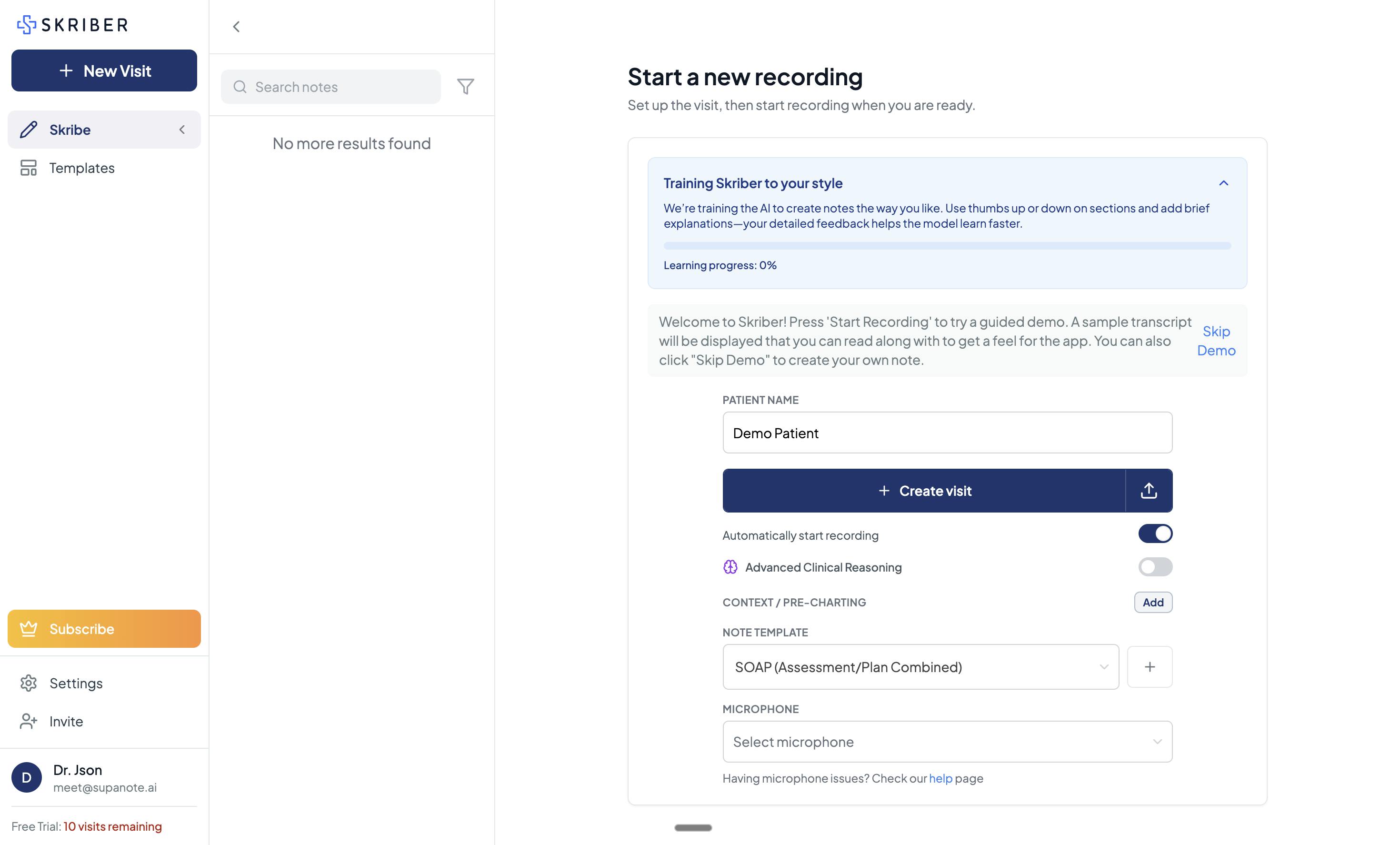
Skriber is a HIPAA compliant dictation app with emphasis on structured note outputs and reduced charting burnout for medical professionals.
Key features to evaluate
- Structured note generation quality and typical edit time
- Verifiable security claims: end to end encryption, BAA, retention controls
- Telehealth and remote documentation workflow fit
- Whether outputs match payer expectations in behavioral health
Best for
Healthcare professionals who want a guided, structured note outcome and teams seeking audit-ready documentation for patient records.
Pricing notes
Free plan with 10 visits. Paid plan (Skriber One) at $85/mo billed annually; custom group pricing.
10. Fusion Narrate
Fusion Narrate works as a dictation input method directly inside your existing chart fields. It's for healthcare professionals who want to replace typing notes, not change their charting flow.
Key features to evaluate
- Reliability inside your EHR systems text boxes and templates
- Quick corrections and clinical shorthand support
- Behavioral health phrasing and section header handling with natural language processing
Best for
Healthcare professionals who live in their EHR and don't want a separate app window. Ideal if you want dictation as a typing replacement, not a full AI scribe note writer.
Pricing notes
14-day free trial. Starts at $71/mo per user; AI Assist add-on at $350/year.
11. DocVilla's Dictation
DocVilla is an EHR platform with built-in dictation and speech to text capabilities. It reduces tool sprawl by keeping documentation and secure storage in one place.
Key features to evaluate
- How well dictation works for your specialty and documentation style
- Cross-device flexibility for mobile devices
- Whether the dictation experience is fast enough to meaningfully reduce your backlog
Best for
Practices already on DocVilla or willing to consolidate tools. Healthcare professionals who want dictation tightly connected to the patient chart.
Pricing notes
Free trial available. EHR plans starting at $100/user/mo (billed annually); dictation included as a platform feature.
Common Mistakes When Choosing a HIPAA Compliant Dictation Software
Mistake 1: Assuming "HIPAA compliant" is a toggle
It's not. You need to confirm a signed BAA before entering real patient data. Read the vendor's data retention, subcontractor, and model training policies carefully to avoid data breaches.
Mistake 2: Buying for accuracy, then drowning in formatting
A perfect transcript is not a progress note. You still need structure: assessment, interventions, progress, treatment plans, risk language, and medical necessity documentation where appropriate.
Mistake 3: Ignoring therapy-specific realities
Couples and family therapy sessions break simplistic dictation tools fast. Emotional dialogue, overlapping speech, accents, code-switching, and silence all matter more in real therapy rooms than in product demos.
Mistake 4: Not planning for group practice controls
Without admin controls, access logs, and clean offboarding processes, you're creating compliance risk every time a clinician leaves. Standardized documentation settings prevent inconsistency across your team and ensure patient privacy.
Quick "Which One Should You Pick?" Guide
Your Situation | Prioritize | Shortlist |
|---|---|---|
Therapist eliminating nightly note backlogs | Structured notes, flexible input, style learning, group support | Supanote, Mentalyc |
Want classic speech recognition software to replace typing | Accuracy, speed, macros, in-chart reliability | Dragon Medical, Fusion Narrate |
Want automated AI scribe drafts | Draft quality, correction workflow, EHR integration | Freed, DeepScribe, Skriber |
Want dictation built into your EHR | Fewer tools, fewer logins, notes attached to chart | DocVilla |
FAQ: HIPAA Compliant Dictation Tools (Therapist Edition)
Do I need a BAA for a medical dictation app to be HIPAA compliant?
Yes. A Business Associate Agreement is a legal contract that obligates the vendor to protect PHI according to HIPAA standards. If a vendor won't sign one, don't use it with patient data. Period.
Is the voice typing on my phone HIPAA compliant?
Generally, no. Consumer voice to text tool options like Apple Dictation or Google Voice Typing are not designed for PHI handling. They typically lack BAAs, end to end encryption guarantees, and data retention controls. Evaluate your specific setup, but default to caution.
Can I use dictation for psychotherapy notes?
You can, but be intentional. Progress notes and psychotherapy notes have different legal protections and storage requirements under HIPAA. Make sure your dictation app lets you control where that content goes and who can access it.
How accurate does dictation need to be for insurance documentation?
Accuracy isn't just about words. It's about clinical meaning and defensibility. A note that says "client denied SI" when the client endorsed it is a liability issue, not a typo. Structured, clinically sound outputs reduce audit risk more than raw transcription accuracy alone.
What if I forget to record a session?
Some dictation software options, like Supanote, let you dictate directly or type unstructured notes after the fact and still generate a formatted progress note. This flexibility matters for real clinical life, where you won't always remember to hit record.
Conclusion
Choosing a HIPAA compliant dictation tool comes down to two decisions: can you trust it with patient information, and does it reliably produce the kind of clinical documentation you actually need for quality care? These are separate questions, and both deserve real answers before you commit.
Modern dictation apps have transformed how many clinicians approach their documentation process. If you want therapist-specific documentation that adapts to your voice, supports family therapy and group sessions, and accepts flexible input, start with Supanote. This essential tool is specifically designed for mental health professionals who need faster documentation.
